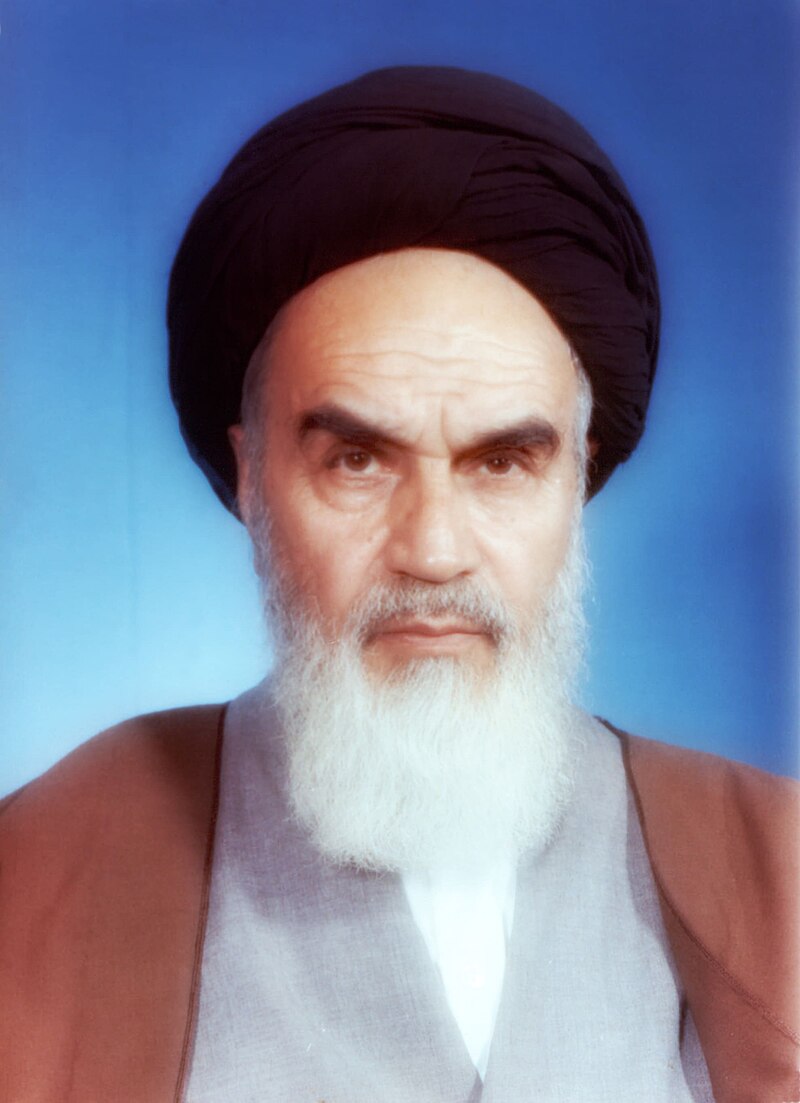
Ayatollah Khomeini

Ayatollah Khomeini was an Iranian revolutionary leader and cleric who became the Supreme Leader of Iran after the 1979 Islamic Revolution. He played a crucial role in overthrowing the Pahlavi monarchy and establishing the Islamic Republic of Iran. Khomeini is best known for his staunch opposition to Western influence in Iran and his promotion of Islamic governance based on Shia principles. His issuance of a fatwa against Salman Rushdie in 1989, following the publication of 'The Satanic Verses', led to widespread controversy and threats against Rushdie's life, symbolizing the ongoing tensions between Islamic fundamentalism and freedom of expression.
Born on Sep 24, 1902 (124 years old)
Global Media Ratings
Countries Mentioned
No country-level mention data available.
Interactive World Map
Each country's color is based on "Mentions" from the table above.
Recent Mentions
 Montenegro:
Khomeini banned the celebration of Cyrus the Great's entry into Babylon after coming to power.
5
 Italy:
Ayatollah Khomeini became a symbol of the revolution against the Shah in Iran.
3
 North Macedonia:
Ayatollah Khomeini led the Islamic Revolution in Iran and became its Supreme Leader.
7
 Greece:
Ayatollah Khomeini was the Supreme Leader of Iran who approved arms purchases.
5
 United States:
Ayatollah Khomeini is referenced as Iran's first tyrant who accepted a ceasefire with Iraq during the war.
4
United States:
Ayatollah Khomeini was the original dictator of the Islamic Republic of Iran who accepted defeat in the Iran-Iraq War.
5
 Guatemala:
The Supreme Leader of Iran, Ayatollah Khomeini, began sending military operators to the region.
4
 Sri Lanka:
Ayatollah Khomeini is referenced as the spiritual leader of Iran targeted in military operations.
5
 Australia:
Ayatollah Khomeini was forced to seek a ceasefire during the Iran-Iraq war.
5
 Turkey:
Khomeini expected to conquer Iraq within a year during the Iran-Iraq war.
3