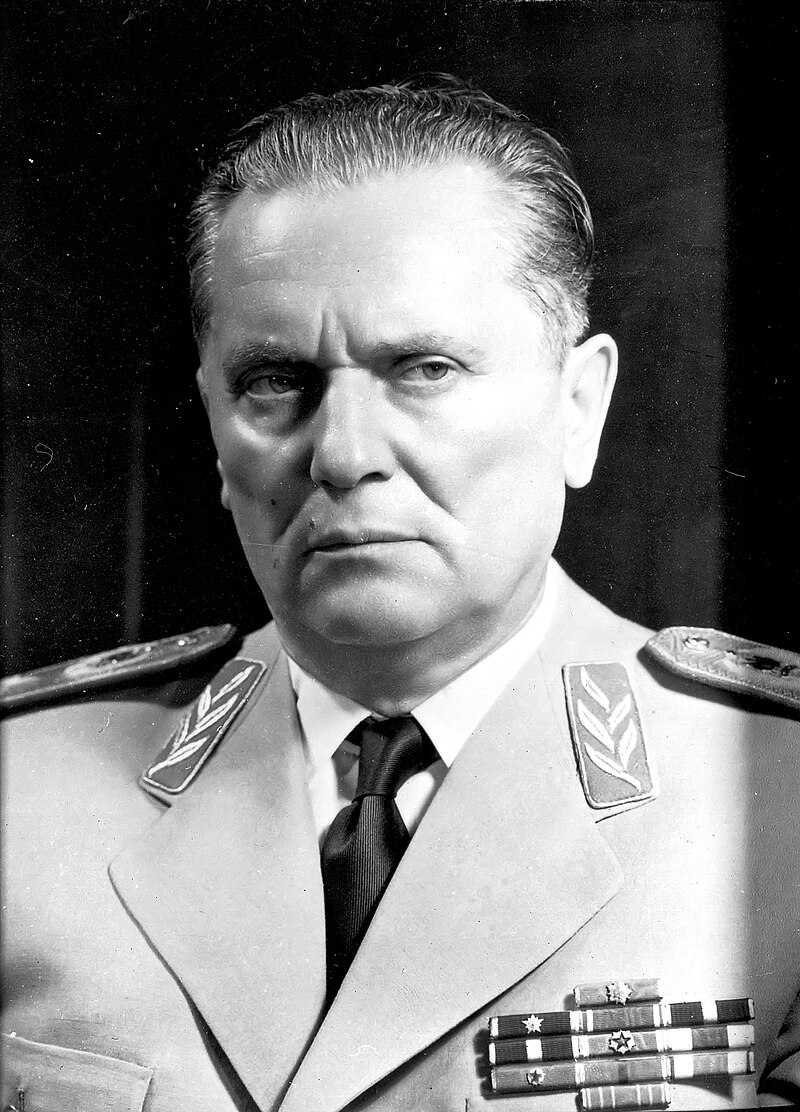
Tito

Josip Broz Tito was a Yugoslav revolutionary and statesman who served as the Prime Minister and later as the President of Yugoslavia. He was a key figure in the anti-fascist resistance during World War II and is known for establishing a socialist federation that maintained a degree of independence from the Soviet Union. His leadership was marked by a unique brand of communism known as 'Titoism,' which emphasized national self-determination and a non-aligned foreign policy. Tito's influence extended beyond Yugoslavia as he became a prominent leader in the Non-Aligned Movement.
Born on May 07, 1892 (134 years old)
Global Media Ratings
Countries Mentioned
| Country | Mentions | Sentiment | Dominance | + Persistence | x Population | = Reach | x GDP (millions) | = Power |
|---|---|---|---|---|---|---|---|---|
| North Macedonia | 1 | 6.00 | 0.30% | +0% | 2,083,374 | 6,164 | $12,800 | 38$ |
| Totals | 1 | 2,083,374 | 6,164 | $12,800 | 38$ |
Interactive World Map
Each country's color is based on "Mentions" from the table above.
Recent Mentions
 North Macedonia:
Tito was the leader of Yugoslavia who provided support to various movements, including those in Iran.
6
North Macedonia:
Tito was the leader of Yugoslavia who provided support to various movements, including those in Iran.
6
 Montenegro:
Tito, the owner of a tool store that remained closed, expressed that the sudden arrival of so many people frightened the local population but also evoked compassion.
6
Montenegro:
Tito, the owner of a tool store that remained closed, expressed that the sudden arrival of so many people frightened the local population but also evoked compassion.
6
 Costa Rica:
Tito was one of the emperors who could be honored with divinity posthumously.
8
Costa Rica:
Tito was one of the emperors who could be honored with divinity posthumously.
8
 Switzerland:
Tito was a key figure in Yugoslavia's foreign policy during the Cold War, balancing between East and West.
8
Switzerland:
Tito was a key figure in Yugoslavia's foreign policy during the Cold War, balancing between East and West.
8
 Italy:
Tito nationalized Sveti Stefan during the former Yugoslavia, converting it into a golden refuge for the cosmopolitan jet set.
7
Italy:
Tito nationalized Sveti Stefan during the former Yugoslavia, converting it into a golden refuge for the cosmopolitan jet set.
7
Montenegro:
Tito was a leader during World War II and is remembered for his role in the region's history.
8
 Australia:
Tito is another smiling owner of Bar Nestor, known for its renowned steak dish.
8
Australia:
Tito is another smiling owner of Bar Nestor, known for its renowned steak dish.
8
 Cabo Verde:
Tito, a taxi driver, expressed optimism about the performance of the Cabo Verde national team.
8
Cabo Verde:
Tito, a taxi driver, expressed optimism about the performance of the Cabo Verde national team.
8
North Macedonia:
The author references Tito in a context discussing the current political system and its challenges.
5
North Macedonia:
The author references Tito in a discussion about historical Macedonians.
5