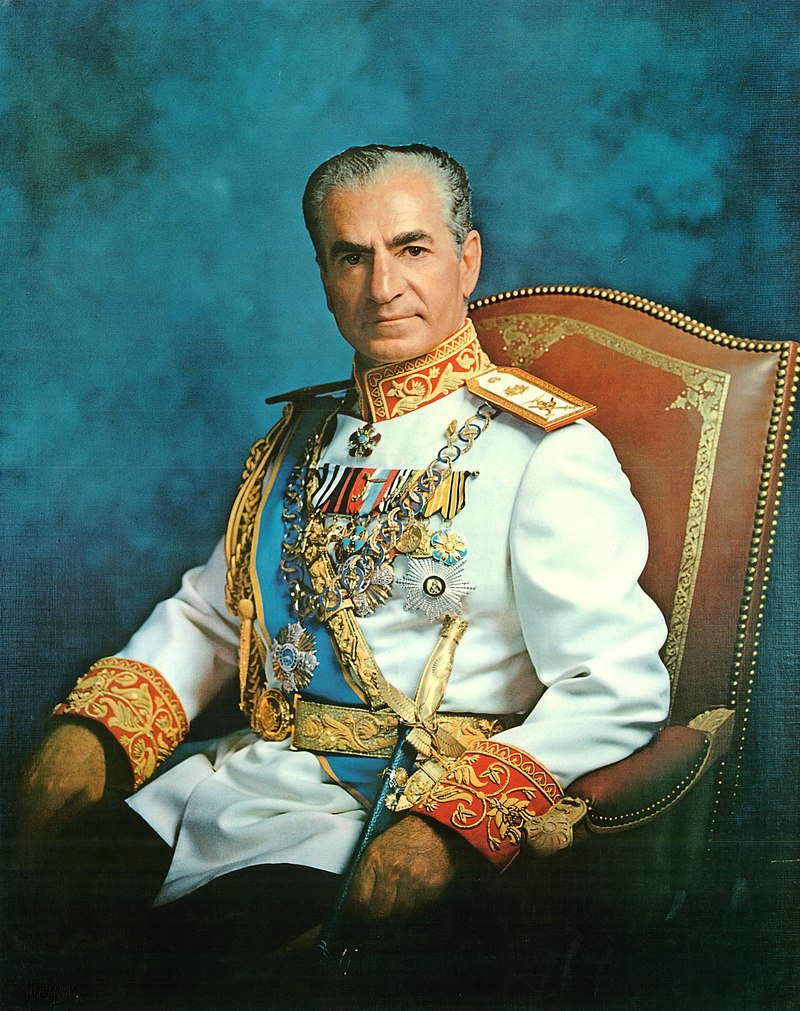
Mohammad Reza Pahlavi

Mohammad Reza Pahlavi was the last Shah of Iran, ruling from 1941 until his overthrow during the 1979 Islamic Revolution. His regime was characterized by Westernization and modernization efforts, but also faced criticism for authoritarianism and human rights abuses. His pro-U.S. stance and close ties with Western powers contributed to widespread discontent, ultimately leading to his exile in January 1979.
Born on Oct 26, 1919 (106 years old)
Global Media Ratings
Countries Mentioned
| Country | Mentions | Sentiment | Dominance | + Persistence | x Population | = Reach | x GDP (millions) | = Power |
|---|---|---|---|---|---|---|---|---|
| Iran | 2 | 5.50 | 0.37% | +0% | 83,992,949 | 311,085 | $610,000 | 2,259$ |
| India | 1 | 7.00 | 0.19% | +0% | 1,380,004,385 | 2,560,305 | $2,900,000 | 5,380$ |
| North Macedonia | 1 | 3.00 | 0.26% | +0% | 2,083,374 | 5,483 | $12,800 | 34$ |
| Totals | 4 | 1,466,080,708 | 2,876,873 | $3,522,800 | 7,673$ |
Interactive World Map
Each country's color is based on "Mentions" from the table above.
Recent Mentions
 North Macedonia:
Mohammad Reza Pahlavi was the Shah of Iran who was overthrown during the Islamic Revolution.
3
North Macedonia:
Mohammad Reza Pahlavi was the Shah of Iran who was overthrown during the Islamic Revolution.
3
 India:
The Shah of Iran, Mohammad Reza Pahlavi, was involved in the negotiation for the transfer of Persian onagers to Israel.
7
India:
The Shah of Iran, Mohammad Reza Pahlavi, was involved in the negotiation for the transfer of Persian onagers to Israel.
7
 Iran:
Mohammad Reza Pahlavi discussed the opening of the Strait of Hormuz and the need for a unified marine framework with Oman.
6
Iran:
Mohammad Reza Pahlavi discussed the opening of the Strait of Hormuz and the need for a unified marine framework with Oman.
6
Iran:
The President was unaware that Ali Tajernia had joined Esteghlal.
5
 United Kingdom:
Mohammad Reza Pahlavi was the western-backed monarch overthrown during the Iranian revolution.
4
United Kingdom:
Mohammad Reza Pahlavi was the western-backed monarch overthrown during the Iranian revolution.
4
 Italy:
Farah Diba Pahlavi reminisces about her late husband, Mohammad Reza Pahlavi, and his legacy.
8
Italy:
Farah Diba Pahlavi reminisces about her late husband, Mohammad Reza Pahlavi, and his legacy.
8
Iran:
Pezeshkian criticized the remarks of the President of the United States as 'impolite'.
3
 Turkey:
Pahlavi fled Iran on January 16, 1979, after facing intense protests and violence.
3
Turkey:
Pahlavi fled Iran on January 16, 1979, after facing intense protests and violence.
3
 Kazakhstan:
Ali Khamenei actively participated in protests against Shah Mohammad Reza Pahlavi.
6
Kazakhstan:
Ali Khamenei actively participated in protests against Shah Mohammad Reza Pahlavi.
6
Iran:
Mohammad Reza Pahlavi is referenced in relation to the historical context of the city and its development.
5