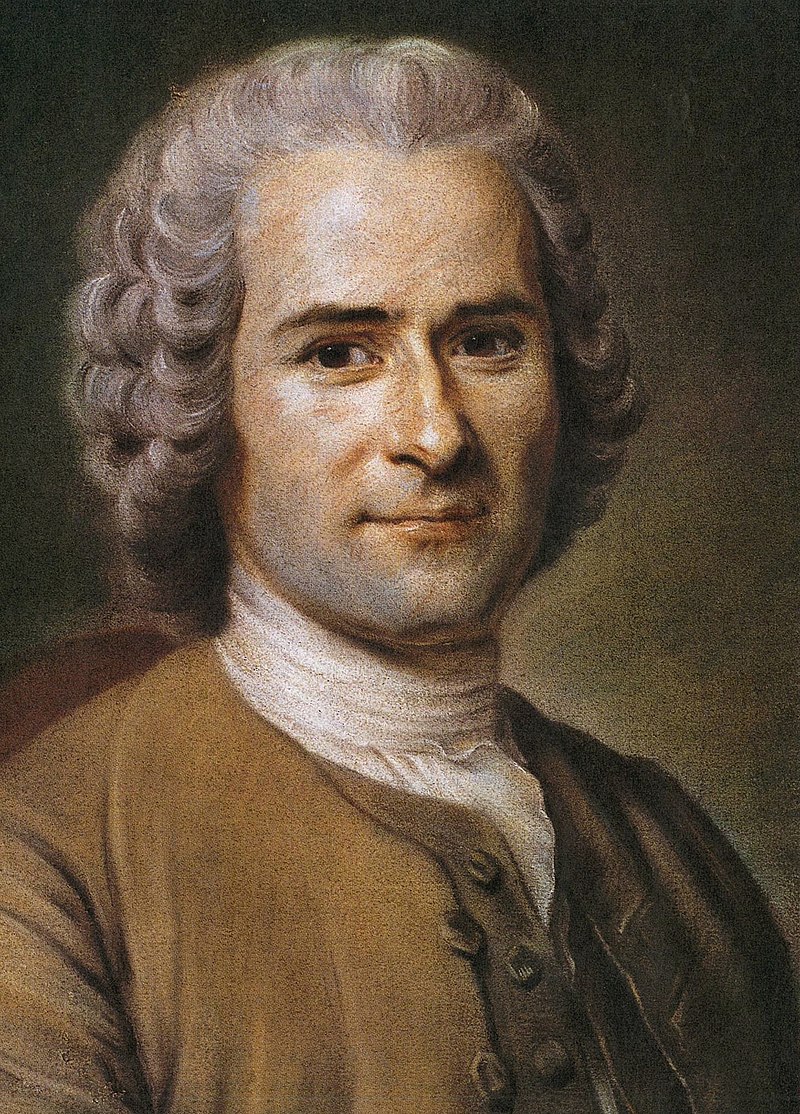
Jean-Jacques Rousseau

Jean-Jacques Rousseau was an 18th-century French philosopher whose works laid the groundwork for modern political and educational thought. He was a critic of the effects of science and technology on society, advocating for a return to a more natural and simplistic way of living. His ideas about the dangers of technological advancement resonate in contemporary discussions about artificial intelligence, emphasizing the need for a balance between human values and technological progress.
Born on Jun 28, 1712 (314 years old)
Global Media Ratings
Countries Mentioned
No country-level mention data available.
Interactive World Map
Each country's color is based on "Mentions" from the table above.
Recent Mentions
 Germany:
Jean-Jacques Rousseau believed that the nature of man is fundamentally good and that people relied on mutual recognition before societies formed hierarchies.
7
Germany:
Jean-Jacques Rousseau believed that the nature of man is fundamentally good and that people relied on mutual recognition before societies formed hierarchies.
7
 Romania:
Rousseau introduced the idea of the social contract, arguing that society corrupts the natural goodness of man.
7
Romania:
Rousseau introduced the idea of the social contract, arguing that society corrupts the natural goodness of man.
7
 Switzerland:
Jean-Jacques Rousseau, a Genevan philosopher, significantly shaped the myth of the 'noble savage' and elevated nature as a moral refuge.
8
Switzerland:
Jean-Jacques Rousseau, a Genevan philosopher, significantly shaped the myth of the 'noble savage' and elevated nature as a moral refuge.
8
 Indonesia:
Rousseau distinguished between the general will and the will of all, emphasizing the importance of the true will of the people.
7
Indonesia:
Rousseau distinguished between the general will and the will of all, emphasizing the importance of the true will of the people.
7
 Belarus:
Jean-Jacques Rousseau is included in the new history textbooks to highlight European influences.
5
Belarus:
Jean-Jacques Rousseau is included in the new history textbooks to highlight European influences.
5
Switzerland:
Jean-Jacques Rousseau was a multi-talented individual known for his contributions as a composer, philosopher, and novelist.
8
 Israel:
Jean-Jacques Rousseau was a significant political theorist of the French Revolution and a friend of Daniel Malthus.
6
Israel:
Jean-Jacques Rousseau was a significant political theorist of the French Revolution and a friend of Daniel Malthus.
6
Switzerland:
Jean-Jacques Rousseau criticized the practice of castration in his writings.
4
 Costa Rica:
Jean-Jacques Rousseau is referenced for his views on electoral processes as moments of collective learning.
6
Costa Rica:
Jean-Jacques Rousseau is referenced for his views on electoral processes as moments of collective learning.
6
 Guyana:
Liberal ideas espoused by Jean-Jacques Rousseau undercut the rationale for absolute authority.
6
Guyana:
Liberal ideas espoused by Jean-Jacques Rousseau undercut the rationale for absolute authority.
6