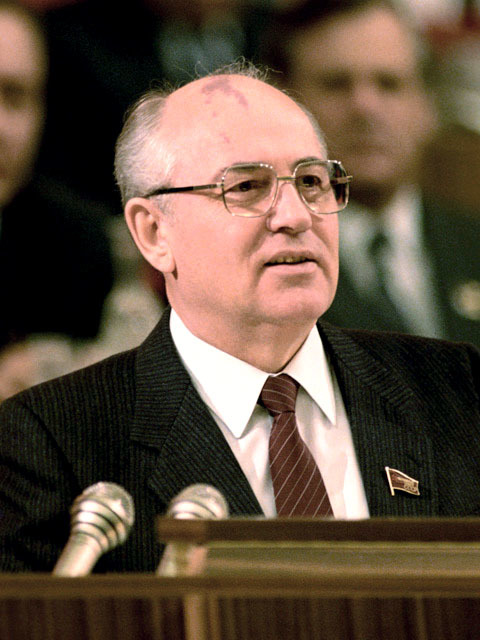
Mikhail Gorbachev

Mikhail Gorbachev was the last leader of the Soviet Union, serving as General Secretary of the Communist Party from 1985 until its dissolution in 1991. He is noted for his policies of glasnost (openness) and perestroika (restructuring), which aimed to reform the Soviet economy and society. Gorbachev's efforts contributed to the end of the Cold War and the eventual collapse of the Soviet Union, making him a pivotal figure in modern history.
Born on Mar 02, 1931 (95 years old)
Global Media Ratings
Countries Mentioned
No country-level mention data available.
Interactive World Map
Each country's color is based on "Mentions" from the table above.
Recent Mentions
 United Kingdom:
He recognised that the game was up, and managed to end the cold war without it becoming hot.
7
 Canada:
Mikhail Gorbachev proved that global coordination on nuclear weapons was possible during a summit with Ronald Reagan.
7
 United States:
The article compares the current summit to the summits between President Ronald Reagan and Soviet leader Mikhail Gorbachev.
5
 Italy:
Mikhail Gorbachev asked for arms reduction during meetings with U.S. presidents.
5
 Montenegro:
Mikhail Gorbachev is associated with the period of perestroika and the reforms that aimed to revitalize the Soviet Union.
7
United States:
Soviet leader Mikhail Gorbachev met with President Ronald Reagan to negotiate nuclear arms reductions.
5
 New Zealand:
Gorbachev is noted for his role in understanding the need to avoid nuclear war during the Cold War.
6
 Greece:
The narrative transitions from Stalin to Gorbachev and the first cracks in the system.
5
Italy:
Mikhail Gorbachev is referenced as someone admired by the citizens from the former East Germany.
7
United Kingdom:
Mikhail Gorbachev is mentioned alongside Ronald Reagan in the context of signing a treaty to avoid nuclear conflict.
6