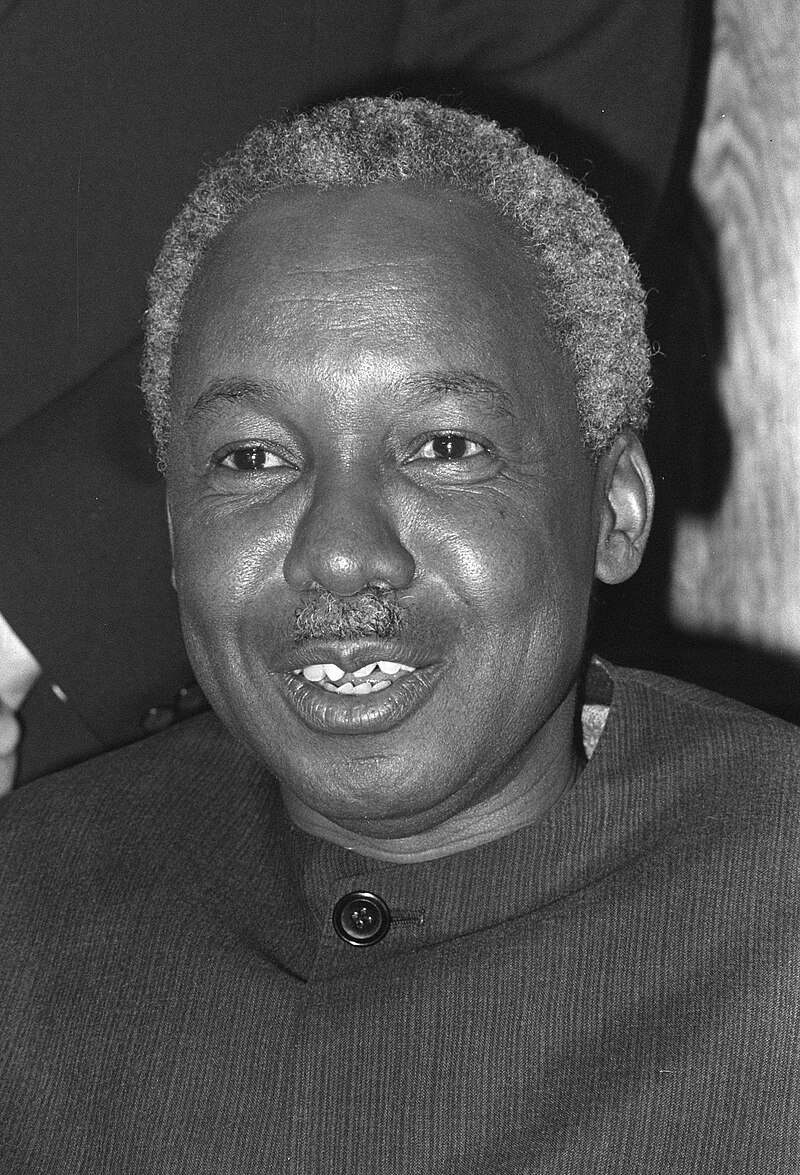
Julius Nyerere

Julius Nyerere was the first President of Tanzania and a key figure in the country's independence movement. He is remembered for his vision of socialism and self-reliance, which shaped Tanzania's early policies and development strategies. The Julius Nyerere Hydropower Project (JHPP) is named in his honor, reflecting his legacy in promoting sustainable energy initiatives.
Born on Apr 13, 1922 (104 years old)
Global Media Ratings
Countries Mentioned
| Country | Mentions | Sentiment | Dominance | + Persistence | x Population | = Reach | x GDP (millions) | = Power |
|---|---|---|---|---|---|---|---|---|
| Tanzania | 2 | 7.50 | 0.66% | +0% | 59,734,213 | 391,700 | $63,000 | 413$ |
| Cameroon | 1 | 7.00 | 0.25% | +0% | 26,545,863 | 65,063 | $39,000 | 96$ |
| Totals | 3 | 86,280,076 | 456,763 | $102,000 | 509$ |
Interactive World Map
Each country's color is based on "Mentions" from the table above.
Recent Mentions
 Tanzania:
Mr Mwarabu served under former founding President Julius Nyerere until 1985.
8
Tanzania:
Mr Mwarabu served under former founding President Julius Nyerere until 1985.
8
 Cameroon:
The mega-central named after Julius Nyerere in Tanzania was recently inaugurated, showcasing Egypt's expertise in energy production.
7
Cameroon:
The mega-central named after Julius Nyerere in Tanzania was recently inaugurated, showcasing Egypt's expertise in energy production.
7
Tanzania:
Julius Nyerere once described Tanzania’s greatest achievement as merely surviving.
7
Tanzania:
Mwalimu Julius Nyerere is honored through the renaming of the cycling tour in his legacy.
9
Tanzania:
The hospital was named after Mwalimu Julius Nyerere, reflecting Angola’s appreciation of his contribution to the liberation of Angola and other African countries.
9
Tanzania:
When Mwalimu (Julius Nyerere) declared war while in Songea, my colleagues and I were picked up by aircraft in Zanzibar.
9
Tanzania:
Mwalimu Julius Nyerere is recognized as the founding President of Tanzania, whose era marked the beginning of defence cooperation with China.
7
 Egypt:
The Tanzanian president mentions the Julius Nyerere Dam project as a positive model for cooperation.
8
Egypt:
The Tanzanian president mentions the Julius Nyerere Dam project as a positive model for cooperation.
8
Tanzania:
It was the late father of our nation Julius Nyerere, who quipped to his comrades through his speech at a Pan African Congress in 1965.
6
Tanzania:
Mwalimu Julius Nyerere was among their strongest critics, warning that externally-driven reforms could impose heavy social costs and reduce national policy autonomy.
7