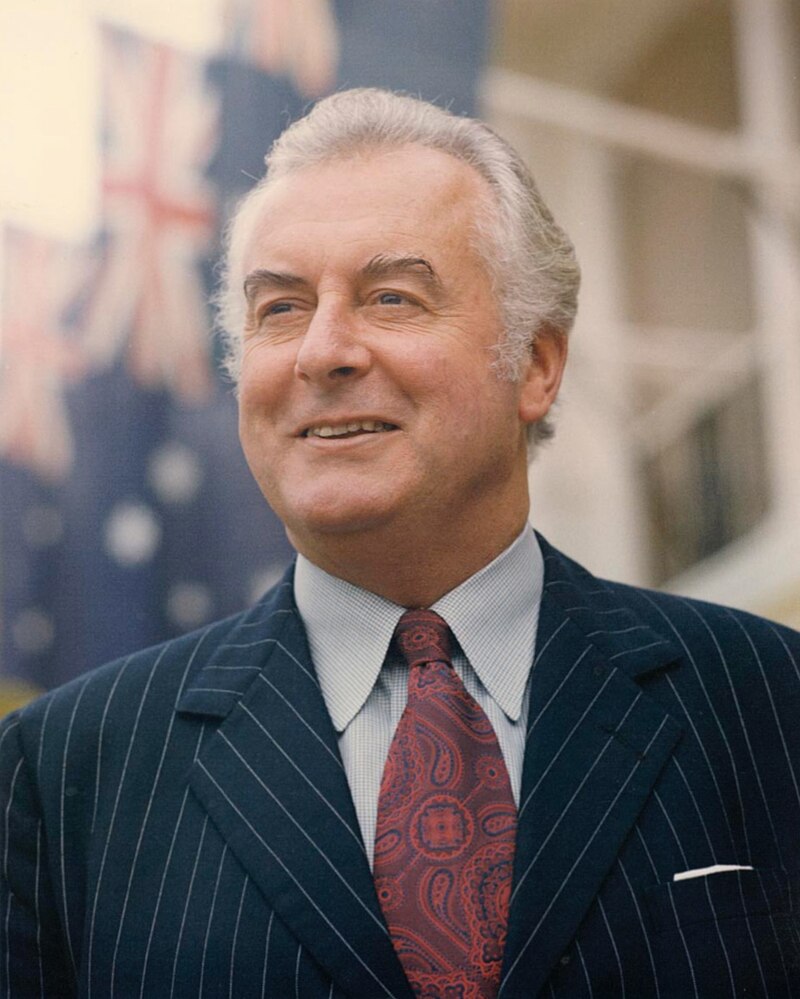
Gough Whitlam

Gough Whitlam was the 21st Prime Minister of Australia, serving from 1972 until his dismissal in 1975. He is known for his progressive policies that aimed to reform education, healthcare, and social welfare, as well as his efforts to promote Australia’s independence in foreign policy. Whitlam's government is often remembered for its ambitious agenda and the controversial circumstances of his ousting.
Born on Jul 11, 1916 (110 years old)
Global Media Ratings
Countries Mentioned
| Country | Mentions | Sentiment | Dominance | + Persistence | x Population | = Reach | x GDP (millions) | = Power |
|---|---|---|---|---|---|---|---|---|
| Australia | 2 | 8.00 | 0.43% | +0% | 25,499,884 | 108,742 | $1,380,000 | 5,885$ |
| Totals | 2 | 25,499,884 | 108,742 | $1,380,000 | 5,885$ |
Interactive World Map
Each country's color is based on "Mentions" from the table above.
Recent Mentions
 Australia:
He is remembered for his speech at an election rally in 1974 that inspired a sense of national independence.
9
Australia:
He is remembered for his speech at an election rally in 1974 that inspired a sense of national independence.
9
Australia:
Gough Whitlam's dismissal in 1975 is a central theme in the new Australian play 'The Palace Letters'.
7
Australia:
Gough Whitlam is referenced as one of the longest-serving Labor leaders, alongside Albanese.
5
Australia:
Gough Whitlam's government removed the last administrative vestiges of the White Australia policy.
6
Australia:
Gough Whitlam was a former Prime Minister of Australia who opposed racism and supported Indigenous rights.
9
 United Kingdom:
Gough Whitlam ended the White Australia policy in 1973, which Pauline Hanson references in her arguments.
5
United Kingdom:
Gough Whitlam ended the White Australia policy in 1973, which Pauline Hanson references in her arguments.
5
Australia:
Pauline Hanson mentioned Gough Whitlam in relation to the end of the White Australia Policy.
5
Australia:
Gough Whitlam is mentioned as the last person to win an election on a platform of bold reform.
6
Australia:
Prime Minister Gough Whitlam made divorce easier, with no grounds needed.
7
Australia:
Gough Whitlam made his historic trip to China to normalise ties in November 1973.
8