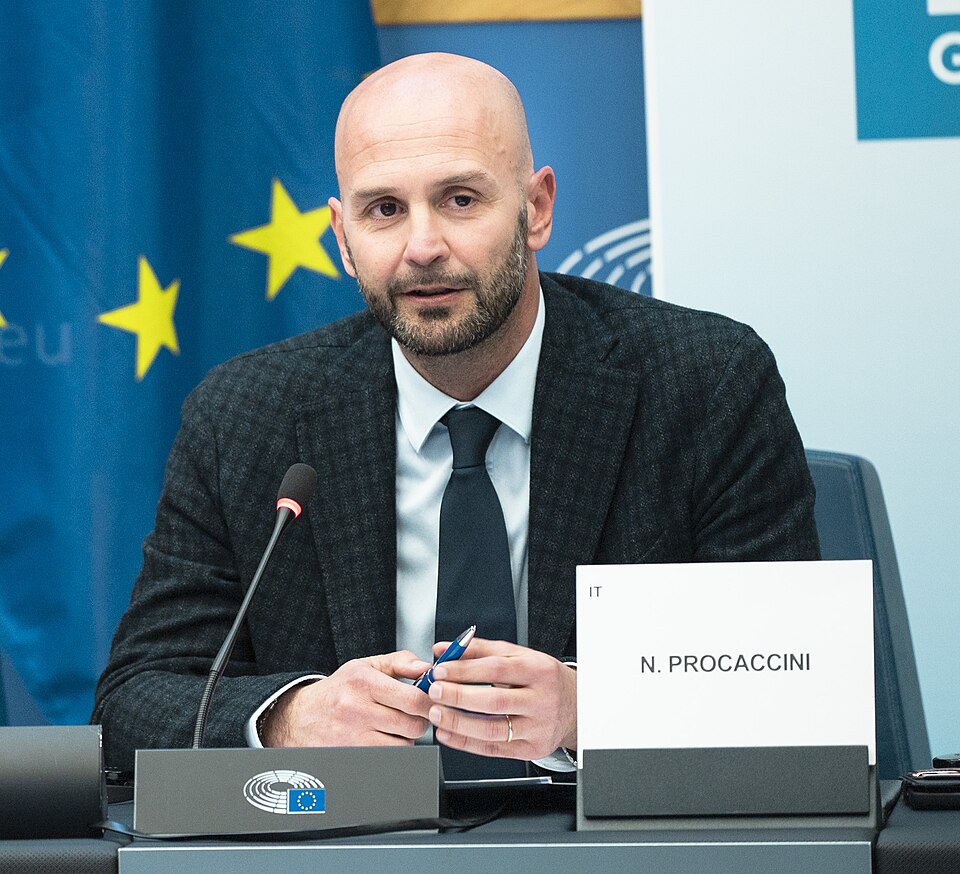
Nicola Procaccini

Nicola Procaccini is an Italian politician and a member of the Brothers of Italy (Fratelli d'Italia) party, where he serves as co-president of the Conservative group in the European Parliament. He has been active in shaping Italy's stance on various European issues, particularly regarding defense policies in the context of the Ukraine conflict. Recently, he was in the news for his role in the European Parliament's votes related to military support for Ukraine, where he articulated the party's decision to abstain from a motion that criticized American involvement in the conflict, reflecting the complex dynamics within the Italian government on foreign policy.
Global Media Ratings
Countries Mentioned
| Country | Mentions | Sentiment | Dominance | + Persistence | x Population | = Reach | x GDP (millions) | = Power |
|---|---|---|---|---|---|---|---|---|
| Canada | 1 | 4.00 | 0.19% | +0% | 38,005,238 | 73,511 | $1,700,000 | 3,288$ |
| Italy | 1 | 3.00 | 0.19% | +0% | 60,461,826 | 116,273 | $2,000,000 | 3,846$ |
| Totals | 2 | 98,467,064 | 189,784 | $3,700,000 | 7,134$ |
Interactive World Map
Each country's color is based on "Mentions" from the table above.
Recent Mentions
 Italy:
Nicola Procaccini is the leader of the FdI group in the European Parliament who criticized the proposal to associate Canada with the EU.
3
Italy:
Nicola Procaccini is the leader of the FdI group in the European Parliament who criticized the proposal to associate Canada with the EU.
3
 Canada:
MEP Nicola Procaccini criticized Ursula von der Leyen for her suggestion regarding Canada’s associate membership.
4
Canada:
MEP Nicola Procaccini criticized Ursula von der Leyen for her suggestion regarding Canada’s associate membership.
4
 United Kingdom:
Nicola Procaccini, co-leader of the European Conservatives and Reformists, said they miss the UK but respect the decision of the British people.
5
United Kingdom:
Nicola Procaccini, co-leader of the European Conservatives and Reformists, said they miss the UK but respect the decision of the British people.
5
 Hungary:
Nicola Procaccini has emphasized the need for honesty regarding Trump's actions.
5
Hungary:
Nicola Procaccini has emphasized the need for honesty regarding Trump's actions.
5
 Uruguay:
Nicola Procaccini, a right-wing government deputy, speaks about the need for realistic migration policies.
4
Uruguay:
Nicola Procaccini, a right-wing government deputy, speaks about the need for realistic migration policies.
4
United Kingdom:
Nicola Procaccini, an MP in Giorgia Meloni's government, speaks about the challenges of mass migration.
4
 Spain:
Nicola Procaccini is the president of the conservative foundation New Direction and a Member of the European Parliament.
6
Spain:
Nicola Procaccini is the president of the conservative foundation New Direction and a Member of the European Parliament.
6
 Romania:
Nicola Procaccini is the co-chair of the European Conservatives and Reformists group.
6
Romania:
Nicola Procaccini is the co-chair of the European Conservatives and Reformists group.
6
 France:
Nicola Procaccini, a close associate of Giorgia Meloni, commented on France's political instability.
5
France:
Nicola Procaccini, a close associate of Giorgia Meloni, commented on France's political instability.
5
Italy:
Nicola Procaccini is a co-chairman of ECR who believes that the propaganda machine of Putin has exploited the motion on social media.
3