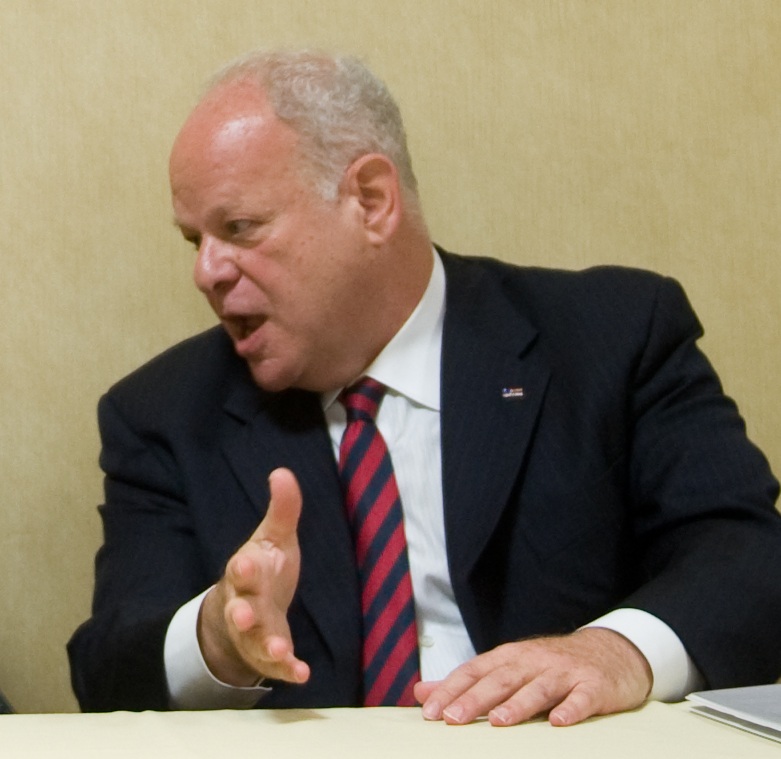
Martin Seligman

Martin Seligman, an American psychologist, is widely recognized as the founder of positive psychology. His research focuses on well-being, resilience, and the factors that contribute to a fulfilling life, profoundly influencing modern psychology and therapy practices.
Born on Aug 12, 1942 (84 years old)
Global Media Ratings
Countries Mentioned
No country-level mention data available.
Interactive World Map
Each country's color is based on "Mentions" from the table above.
Recent Mentions
 Indonesia:
Martin Seligman introduced the concept of learned helplessness in 1967.
5
Indonesia:
Martin Seligman introduced the concept of learned helplessness in 1967.
5
 Morocco:
Martin Seligman's work in positive psychology emphasizes that emotional regulation is a skill that can be developed.
8
Morocco:
Martin Seligman's work in positive psychology emphasizes that emotional regulation is a skill that can be developed.
8
 Ecuador:
Martin Seligman is known for his research on learned helplessness.
8
Ecuador:
Martin Seligman is known for his research on learned helplessness.
8
 Venezuela:
Martin Seligman explains that music can induce states of flow, leading to full concentration, pleasure, and transcendence.
9
Venezuela:
Martin Seligman explains that music can induce states of flow, leading to full concentration, pleasure, and transcendence.
9
 Brazil:
Martin Seligman is a psychologist from the University of Pennsylvania who advocated for positive psychology.
8
Brazil:
Martin Seligman is a psychologist from the University of Pennsylvania who advocated for positive psychology.
8
 Guyana:
Martin Seligman is a leading authority in Positive Psychology, which is discussed in the context of the article.
7
Guyana:
Martin Seligman is a leading authority in Positive Psychology, which is discussed in the context of the article.
7
Venezuela:
Martin Seligman demonstrated that optimistic people tend to live longer and recover better from illnesses.
9
 Canada:
Psychologist Martin Seligman says it is crucial that humans experience 'contingency,' which means knowing that their actions matter and affect outcomes.
8
Canada:
Psychologist Martin Seligman says it is crucial that humans experience 'contingency,' which means knowing that their actions matter and affect outcomes.
8
 Costa Rica:
Martin Seligman's theory of learned helplessness is referenced to explain resignation in society.
6
Costa Rica:
Martin Seligman's theory of learned helplessness is referenced to explain resignation in society.
6