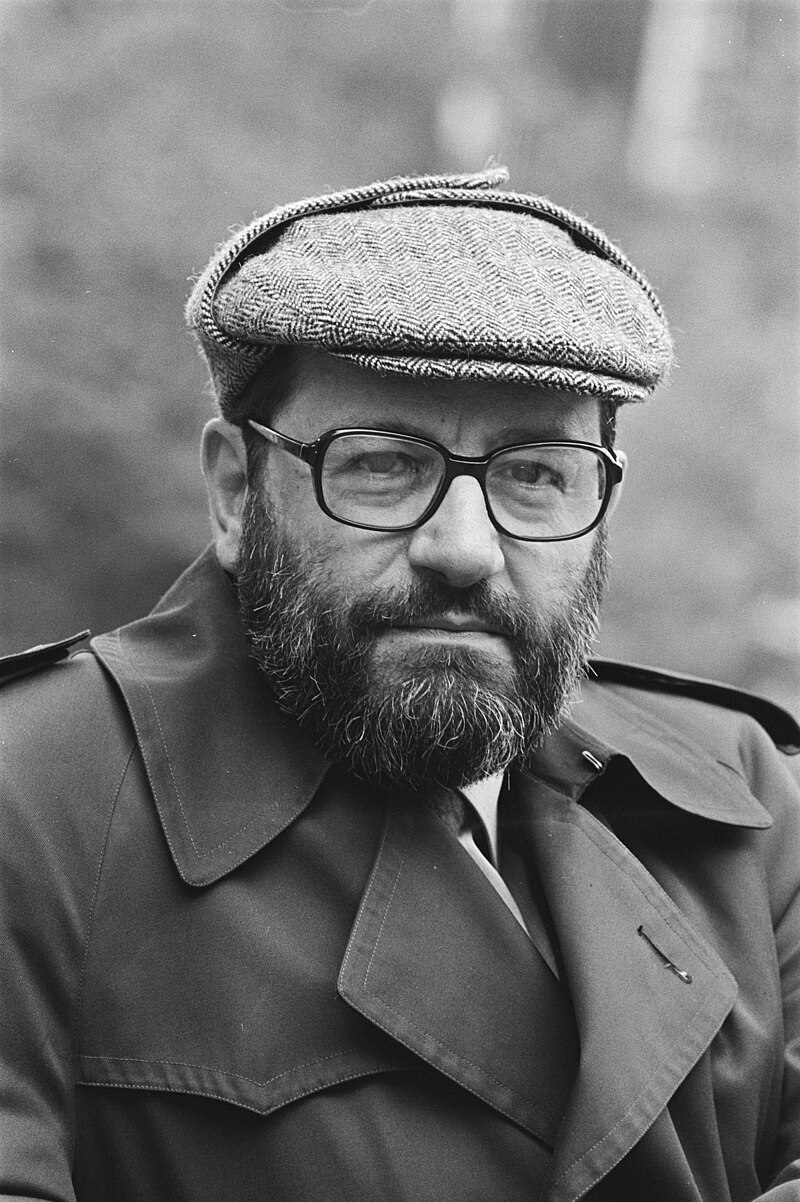
Umberto Eco

Umberto Eco was an Italian novelist, literary critic, and philosopher, best known for his novel 'The Name of the Rose.' His work often explored themes of semiotics, culture, and the interplay between history and fiction.
Born on Feb 05, 1932 (94 years old)
Global Media Ratings
Countries Mentioned
| Country | Mentions | Sentiment | Dominance | + Persistence | x Population | = Reach | x GDP (millions) | = Power |
|---|---|---|---|---|---|---|---|---|
| Italy | 1 | 5.00 | 0.21% | +0% | 60,461,826 | 128,642 | $2,000,000 | 4,255$ |
| Greece | 1 | 7.00 | 0.21% | +0% | 10,423,054 | 22,224 | $190,000 | 405$ |
| Totals | 2 | 70,884,880 | 150,866 | $2,190,000 | 4,660$ |
Interactive World Map
Each country's color is based on "Mentions" from the table above.
Recent Mentions
 Greece:
Umberto Eco's work is referenced in relation to cultural phenomena and societal reactions.
7
Greece:
Umberto Eco's work is referenced in relation to cultural phenomena and societal reactions.
7
 Italy:
Umberto Eco contributed to the discussion with his article Le guerre sante, passione e ragione after the September 11 attacks.
5
Italy:
Umberto Eco contributed to the discussion with his article Le guerre sante, passione e ragione after the September 11 attacks.
5
Greece:
Umberto Eco wrote about how he learned of Iraq's invasion of Kuwait while on vacation.
5
 Montenegro:
Duran studied definitions of fascism, including those offered by Eco.
5
Montenegro:
Duran studied definitions of fascism, including those offered by Eco.
5
 Canada:
Umberto Eco famously called The Count of Monte Cristo 'one of the most badly written novels of all time.'
3
Canada:
Umberto Eco famously called The Count of Monte Cristo 'one of the most badly written novels of all time.'
3
 Indonesia:
Umberto Eco proposed that semiotics is a discipline for studying everything that can be used to lie.
7
Indonesia:
Umberto Eco proposed that semiotics is a discipline for studying everything that can be used to lie.
7
 North Macedonia:
Umberto Eco's thought encapsulates the essence of his work and the film 'The Name of the Rose'.
9
North Macedonia:
Umberto Eco's thought encapsulates the essence of his work and the film 'The Name of the Rose'.
9
 Argentina:
Umberto Eco highlights Helena in his work 'Historia de la Belleza'.
8
Argentina:
Umberto Eco highlights Helena in his work 'Historia de la Belleza'.
8
 Andorra:
Umberto Eco is the author of the novel 'El nom de la rosa', which was later adapted into a film.
9
Andorra:
Umberto Eco is the author of the novel 'El nom de la rosa', which was later adapted into a film.
9
Italy:
Umberto Eco was a notable figure in the media landscape that Clara Martelli was part of.
7