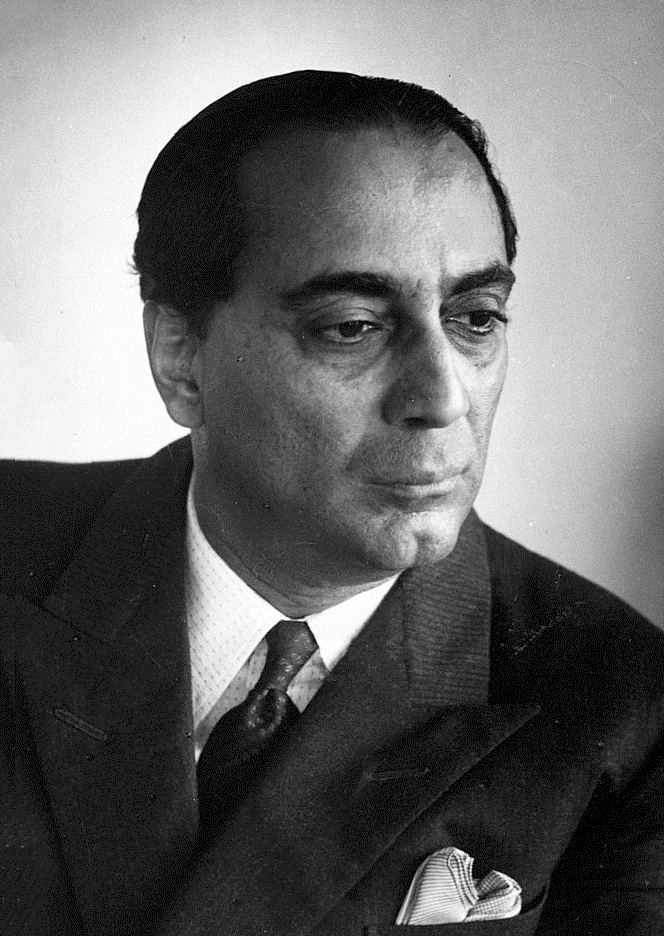
Homi Bhabha

Homi Bhabha was an influential Indian physicist and a key architect of India's nuclear program. Born in 1909, he is often referred to as the 'father of Indian nuclear science' for his foundational work in developing nuclear energy in India. Bhabha established the Tata Institute of Fundamental Research and played a critical role in the establishment of the Atomic Energy Commission of India. His vision and leadership laid the groundwork for India’s advancements in atomic research, and he remains a celebrated figure in the country's scientific history.
Born on Oct 30, 1909 (116 years old)
Global Media Ratings
Countries Mentioned
No country-level mention data available.
Interactive World Map
Each country's color is based on "Mentions" from the table above.
Recent Mentions
 Tunisia:
Homi Bhabha described the 'third space' as a hybrid place of cultural translation.
7
Tunisia:
Homi Bhabha described the 'third space' as a hybrid place of cultural translation.
7
Tunisia:
Homi Bhabha's concept of the 'third space' refers to a place of negotiation between seemingly opposing registers.
7
 India:
Homi Bhabha was asked by Pt Jawaharlal Nehru to commence working on Atomic Energy for India.
8
India:
Homi Bhabha was asked by Pt Jawaharlal Nehru to commence working on Atomic Energy for India.
8
India:
Dr Homi Bhabha worked closely with Dr Eknath Chitnis in the early years of the Indian Space Research Organisation.
9