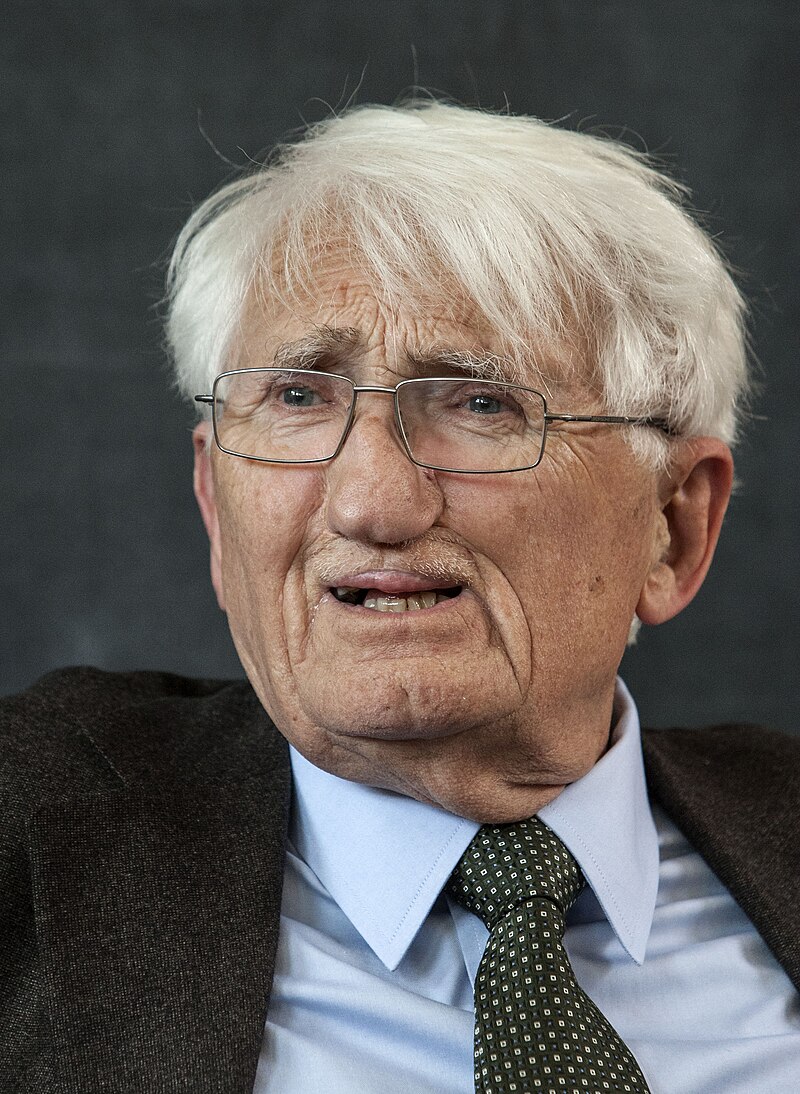
Jürgen Habermas

Jürgen Habermas is a renowned German philosopher and sociologist known for his work in critical theory and public philosophy. He gained prominence in the 1960s and is often associated with the Frankfurt School of social thought. Habermas's theories on communicative rationality and the public sphere have had a profound impact on contemporary social and political theory. He has frequently commented on the transformations within German society, including the legacy of the 1968 movements, which he references in relation to the contributions of figures like Rita Süssmuth.
Born on Jun 18, 1929 (97 years old)
Global Media Ratings
Countries Mentioned
| Country | Mentions | Sentiment | Dominance | + Persistence | x Population | = Reach | x GDP (millions) | = Power |
|---|---|---|---|---|---|---|---|---|
| Panama | 1 | 7.00 | 0.23% | +0% | 4,314,768 | 9,874 | $76,000 | 174$ |
| Totals | 1 | 4,314,768 | 9,874 | $76,000 | 174$ |
Interactive World Map
Each country's color is based on "Mentions" from the table above.
Recent Mentions
 Panama:
Jürgen Habermas was a prominent philosopher whose work focused on communication and democracy.
7
Panama:
Jürgen Habermas was a prominent philosopher whose work focused on communication and democracy.
7
 Gabon:
Jürgen Habermas emphasizes the importance of public communication for democracy.
7
Gabon:
Jürgen Habermas emphasizes the importance of public communication for democracy.
7
 Taiwan:
German philosopher Jurgen Habermas emphasized the importance of a public sphere for free and open discourse.
8
Taiwan:
German philosopher Jurgen Habermas emphasized the importance of a public sphere for free and open discourse.
8
 Switzerland:
Jürgen Habermas is mentioned as one of the intellectuals who spoke against German arms deliveries to Ukraine.
5
Switzerland:
Jürgen Habermas is mentioned as one of the intellectuals who spoke against German arms deliveries to Ukraine.
5
Switzerland:
Jürgen Habermas is a philosopher known for his famous quote about being children of May 8, 1945.
8
Switzerland:
Jürgen Habermas publicly denounced Ernst Nolte and others who sought to relativize or normalize the German past.
7
Switzerland:
Jürgen Habermas was a philosopher who criticized Michael Stürmer during the Historikerstreit.
3
Switzerland:
Jürgen Habermas warned against the resurgence of German nationalism.
6
 Paraguay:
Jürgen Habermas is quoted by Peña regarding the ideal of deliberative democracy.
7
Paraguay:
Jürgen Habermas is quoted by Peña regarding the ideal of deliberative democracy.
7
 Uruguay:
Jürgen Habermas argues that the public sphere is the essential space for rational collective construction in democracy.
5
Uruguay:
Jürgen Habermas argues that the public sphere is the essential space for rational collective construction in democracy.
5