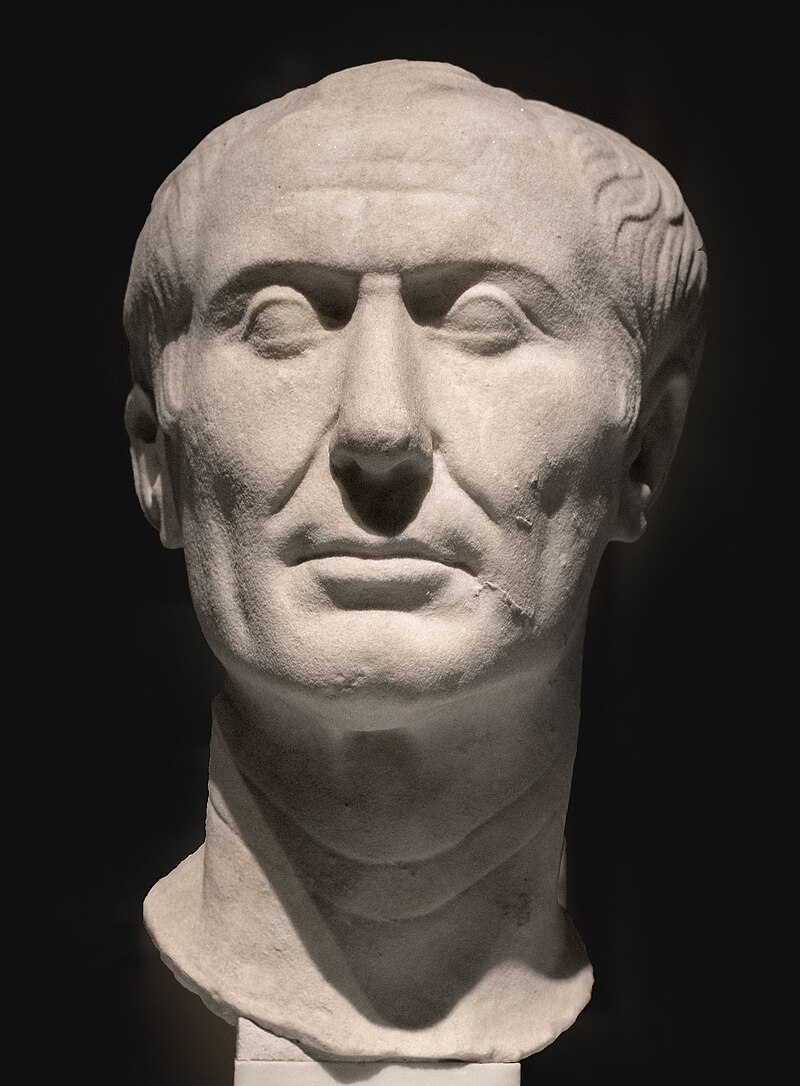
Julius Caesar

Julius Caesar (100-44 BC) was a Roman general, statesman, and pivotal figure in the transition from the Roman Republic to the Roman Empire. Known for his military conquests and political acumen, he played a critical role in the Gallic Wars and famously crossed the Rubicon River, which led to a civil war. His centralization of power and reforms laid the groundwork for the imperial system, but his rule ended with his assassination on the Ides of March due to fears of his rising power.
Global Media Ratings
Countries Mentioned
No country-level mention data available.
Interactive World Map
Each country's color is based on "Mentions" from the table above.
Recent Mentions
 Dominican Republic:
Julius Caesar referenced the ancient Lutecia in his account of the conquest of the city in 52 BC.
7
 Canada:
Julius Caesar was the adopted father of Octavius and a significant figure in Roman history.
9
 United Kingdom:
Lutetia was first mentioned in book seven of Julius Caesar’s Gallic Wars series.
7
 Switzerland:
Julius Caesar is mentioned as a political figure whose actions contributed to the chaos in ancient Rome.
5
 Romania:
Julius Caesar was the adoptive father of Octavian Augustus and his assassination highlighted the vulnerabilities of Roman leaders.
7
 North Macedonia:
The article explores the appearance of Julius Caesar in a modern context.
7
 Greece:
Julius Caesar is known for crossing the Rubicon and declaring war on the Roman Senate.
9
 Pakistan:
Julius Caesar was assassinated on the Ides of March, which later became associated with bad omens.
7
 Belarus:
The villa's library is believed to have belonged to the father-in-law of Julius Caesar.
6
 Israel:
Julius Caesar led a military expedition to Britain in 55 BC.
7