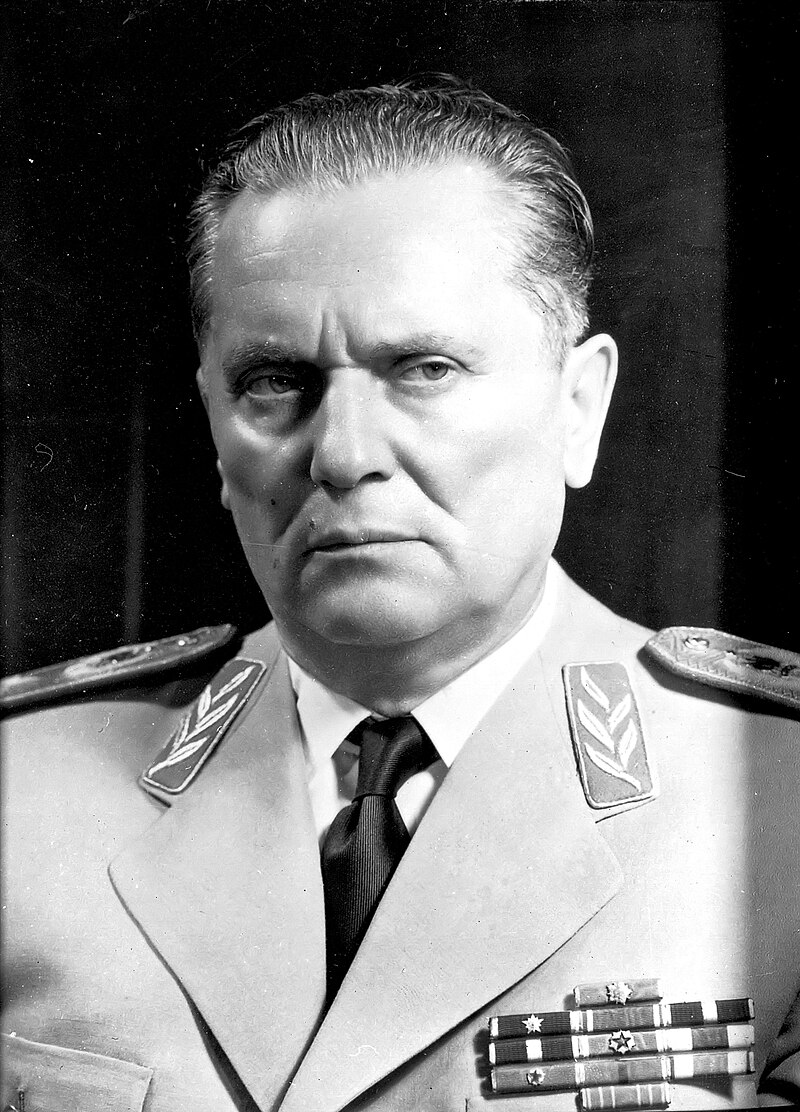
Josip Broz Tito

Josip Broz Tito was a Yugoslav revolutionary leader and statesman who served as Prime Minister and later President of Yugoslavia from 1945 until his death in 1980. He is known for his role in leading the Yugoslav Partisans against Axis forces during World War II and for his post-war policies that promoted a unique form of socialism independent of Soviet influence. Tito's legacy is complex; while he is celebrated for unifying the diverse ethnic groups of Yugoslavia and fostering economic growth, he is also criticized for his authoritarian rule and the repression of political dissent.
Born on May 07, 1892 (134 years old)
Global Media Ratings
Countries Mentioned
| Country | Mentions | Sentiment | Dominance | + Persistence | x Population | = Reach | x GDP (millions) | = Power |
|---|---|---|---|---|---|---|---|---|
| Croatia | 2 | 5.00 | 0.37% | +10% | 4,105,267 | 16,725 | $68,000 | 277$ |
| Serbia | 1 | 8.00 | 0.19% | +0% | 8,737,371 | 16,180 | $55,000 | 102$ |
| Bosnia and Herzegovina | 1 | 8.00 | 0.21% | +0% | 3,280,815 | 6,807 | $19,000 | 39$ |
| Totals | 4 | 16,123,453 | 39,712 | $142,000 | 418$ |
Interactive World Map
Each country's color is based on "Mentions" from the table above.
Recent Mentions
 Croatia:
Josip Broz Tito's death caused widespread anxiety in Yugoslavia.
5
Croatia:
Josip Broz Tito's death caused widespread anxiety in Yugoslavia.
5
Croatia:
Josip Broz Tito's death caused collective anxiety in Yugoslavia.
5
 Bosnia and Herzegovina:
Radončić referenced Josip Broz Tito's achievements in infrastructure from 80 years ago to emphasize the potential of the current generation.
8
Bosnia and Herzegovina:
Radončić referenced Josip Broz Tito's achievements in infrastructure from 80 years ago to emphasize the potential of the current generation.
8
 Serbia:
Josip Broz Tito was known for his involvement in the development of the island Vanga, which became one of his favorite places for relaxation.
8
Serbia:
Josip Broz Tito was known for his involvement in the development of the island Vanga, which became one of his favorite places for relaxation.
8
 North Macedonia:
Josip Broz Tito was the president of Yugoslavia at the time of the earthquake.
7
North Macedonia:
Josip Broz Tito was the president of Yugoslavia at the time of the earthquake.
7
 Slovenia:
Josip Broz Tito was the leader of Yugoslavia whom Olivera Katarina claimed to have met and who was admired by her.
6
Slovenia:
Josip Broz Tito was the leader of Yugoslavia whom Olivera Katarina claimed to have met and who was admired by her.
6
Serbia:
Josip Broz Tito was reportedly captivated by Olivera Katarina's beauty.
7
Slovenia:
Tito distanced himself from Stalinist violence by promoting workers' self-management.
6
Slovenia:
Josip Broz Tito was the eternal president of Yugoslavia who passed away 35 years after the end of World War II.
7
Serbia:
Vučić referenced Josip Broz Tito in the context of Jimmy Carter's visit.
5