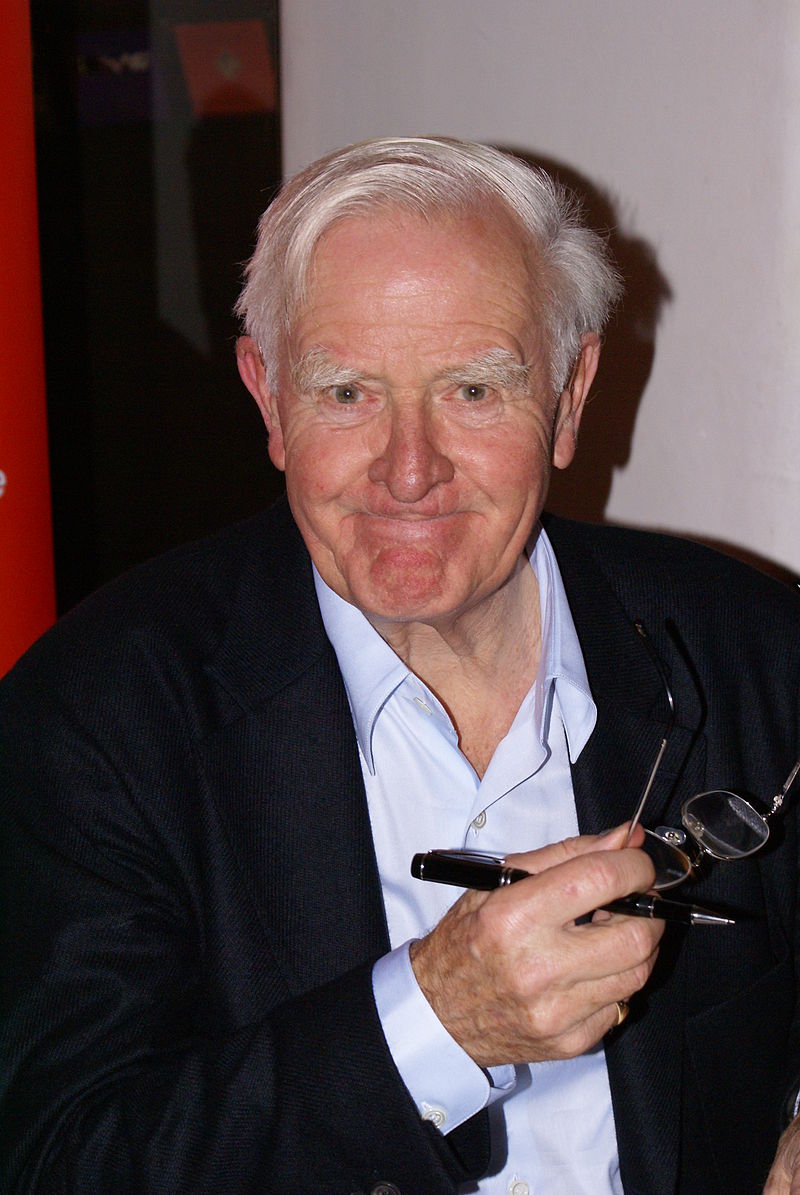
John le Carré

John le Carré was a celebrated British author, renowned for his espionage novels that delve into the moral complexities of intelligence work during the Cold War. His works, including classics like 'The Spy Who Came in from the Cold' and 'Tinker Tailor Soldier Spy,' are acclaimed for their intricate plots and deep characterizations. His legacy continues through his son Nick Harkaway, who has recently explored his father's characters in 'Karla’s Choice.'
Born on Oct 19, 1931 (94 years old)
Global Media Ratings
Countries Mentioned
| Country | Mentions | Sentiment | Dominance | + Persistence | x Population | = Reach | x GDP (millions) | = Power |
|---|---|---|---|---|---|---|---|---|
| Ireland | 2 | 9.00 | 0.41% | +10% | 5,030,000 | 22,723 | $5,100 | 23$ |
| Germany | 1 | 9.00 | 0.20% | +0% | 83,783,942 | 165,254 | $3,845,000 | 7,584$ |
| Totals | 3 | 88,813,942 | 187,977 | $3,850,100 | 7,607$ |
Interactive World Map
Each country's color is based on "Mentions" from the table above.
Recent Mentions
 Ireland:
John le Carré was a quintessential English novelist known for his espionage novels.
9
Ireland:
John le Carré was a quintessential English novelist known for his espionage novels.
9
Ireland:
John le Carré is referenced for his book Call of the Dead, which Richard Osman bought after the success of his own book.
9
 Germany:
John le Carré is known for explaining the war on terror in his spy novel 'Marionetten'.
9
Germany:
John le Carré is known for explaining the war on terror in his spy novel 'Marionetten'.
9
 United Kingdom:
Barack Obama has chosen Tinker Tailor Soldier Spy by John le Carré as one of the books for his podcast.
9
United Kingdom:
Barack Obama has chosen Tinker Tailor Soldier Spy by John le Carré as one of the books for his podcast.
9
 Estonia:
The game is compared to the works of John le Carré by Christopher Byrd.
9
Estonia:
The game is compared to the works of John le Carré by Christopher Byrd.
9
 Norway:
John le Carré's real name was David John Moore Cornwell.
8
Norway:
John le Carré's real name was David John Moore Cornwell.
8
United Kingdom:
John le Carré's novel inspired the first season of The Night Manager.
8
 Denmark:
John le Carré is the author of the spy novel 'The Night Manager' which the series is based on.
7
Denmark:
John le Carré is the author of the spy novel 'The Night Manager' which the series is based on.
7
 Australia:
John le Carré is a renowned espionage writer whose works inspired The Night Manager.
9
Australia:
John le Carré is a renowned espionage writer whose works inspired The Night Manager.
9
 Greece:
John le Carré was a reclusive English author who rarely gave interviews but spoke to Greek journalists about his views on Greece.
8
Greece:
John le Carré was a reclusive English author who rarely gave interviews but spoke to Greek journalists about his views on Greece.
8