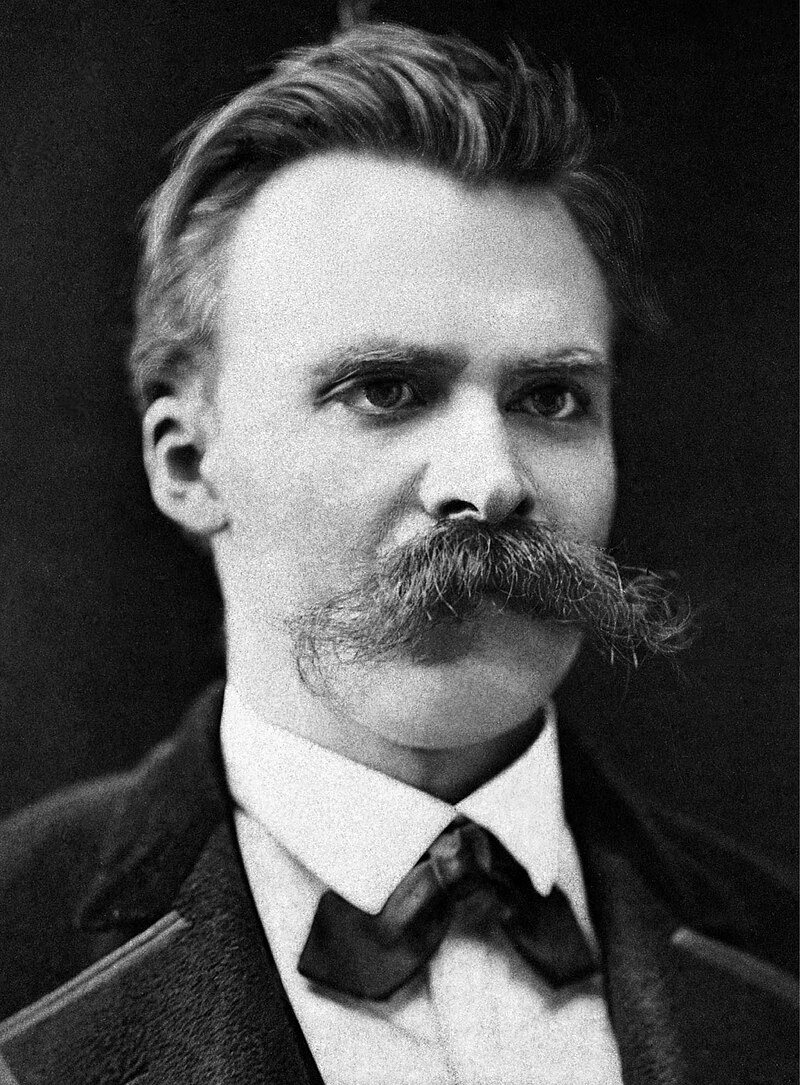
Friedrich Nietzsche

Friedrich Nietzsche was a German philosopher, cultural critic, and poet, known for his profound and often controversial ideas about morality, culture, and existence. Born in 1844, Nietzsche's work explored themes such as the death of God, the will to power, and the concept of the Übermensch (Overman), challenging the foundations of traditional Western philosophy and morality. His writings, including 'Thus Spoke Zarathustra' and 'Beyond Good and Evil,' have had a lasting impact on existentialism, postmodernism, and various fields of the humanities. Nietzsche's critique of nihilism and his call for the creation of new values continue to resonate in contemporary discussions about meaning and existence.
Born on Oct 15, 1844 (182 years old)
Global Media Ratings
Countries Mentioned
No country-level mention data available.
Interactive World Map
Each country's color is based on "Mentions" from the table above.
Recent Mentions
 Switzerland:
Friedrich Nietzsche admired Buddhism for its analysis of suffering and contrasted it with Christianity.
7
Switzerland:
Friedrich Nietzsche was a German philosopher known for his radical critique of traditional values and his concept of the Übermensch.
8
 United Kingdom:
Friedrich Nietzsche is discussed in relation to his breakdown in Turin and his compassion for a suffering horse.
6
 El Salvador:
Nietzsche famously declared that 'God is dead', questioning the need for religion.
7
 Italy:
Friedrich Nietzsche's writings are part of the influential pantheon that Augias reflects upon in his work.
7
Switzerland:
Friedrich Nietzsche's thoughts on music are referenced in relation to 'Carmen'.
5
 Slovenia:
Friedrich Nietzsche stated that what he narrates is the history of the next two centuries.
6
 Argentina:
Friedrich Nietzsche claimed to be a master of aphorisms and sought to express profound ideas in concise forms.
8
 Ireland:
Friedrich Nietzsche claimed that it was impossible to make value judgments on life.
5
 India:
Friedrich Nietzsche criticized patterns in religious institutions, arguing they could become tools of control using human fear and desires.
5