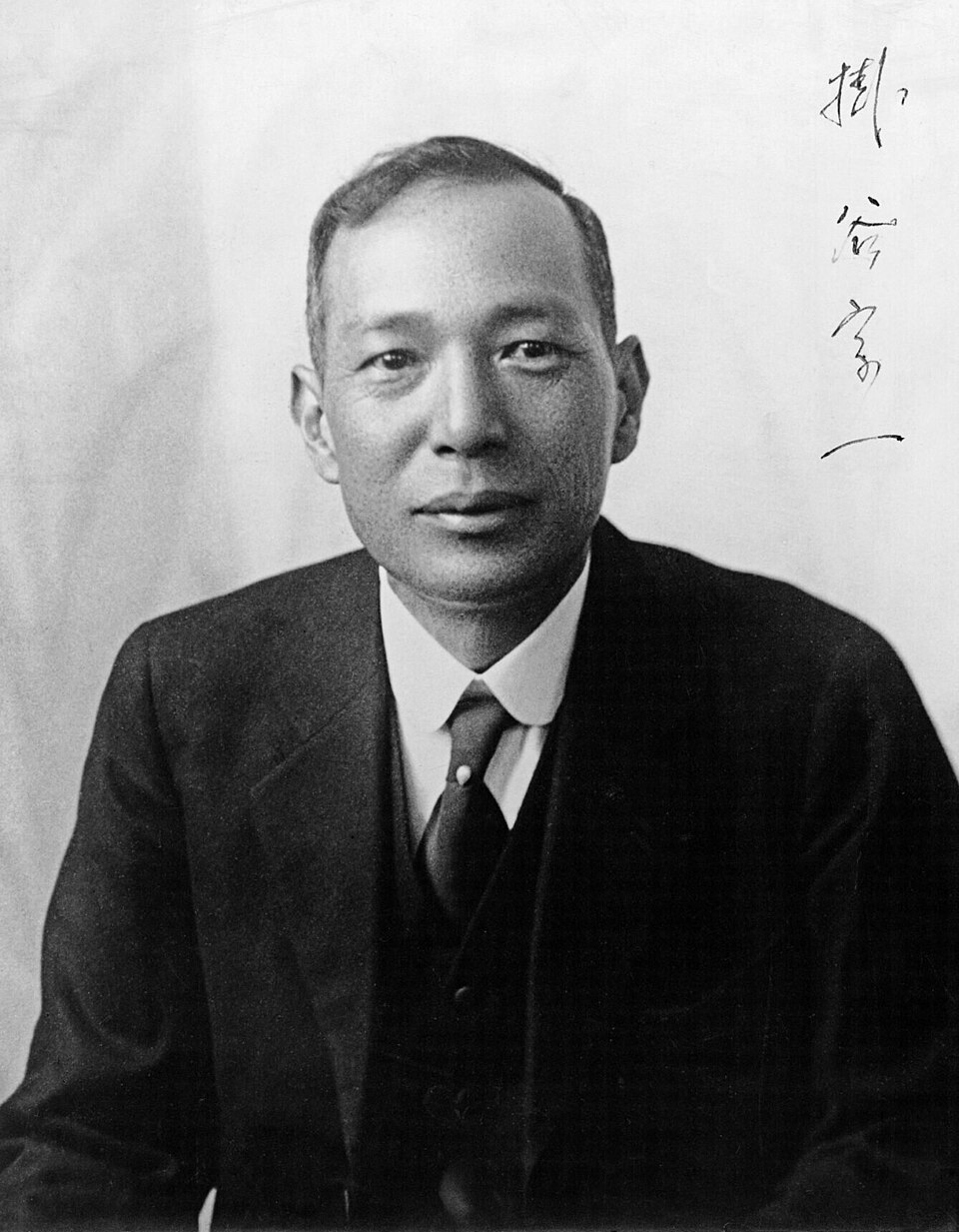
Soichi Kakeya

Soichi Kakeya was a Japanese mathematician known for proposing the Kakeya conjecture in 1917, which revolves around the minimal area required for a needle to rotate and point in different directions. His work laid the groundwork for significant developments in geometric measure theory.
Global Media Ratings
Countries Mentioned
No country-level mention data available.
Interactive World Map
Each country's color is based on "Mentions" from the table above.
Recent Mentions
 Panama:
Kakeya posed a question in 1917 that Wang and Zahl later addressed.
6
Panama:
Kakeya posed a question in 1917 that Wang and Zahl later addressed.
6
 Vietnam:
Sōichi Kakeya first proposed the Kakeya conjecture in 1917, which has challenged mathematicians for over a century.
7
Vietnam:
Sōichi Kakeya first proposed the Kakeya conjecture in 1917, which has challenged mathematicians for over a century.
7
 Spain:
The Japanese mathematician Soichi Kakeya posed a simple problem in 1917 regarding the minimum area a needle would trace when turned.
7
Spain:
The Japanese mathematician Soichi Kakeya posed a simple problem in 1917 regarding the minimum area a needle would trace when turned.
7