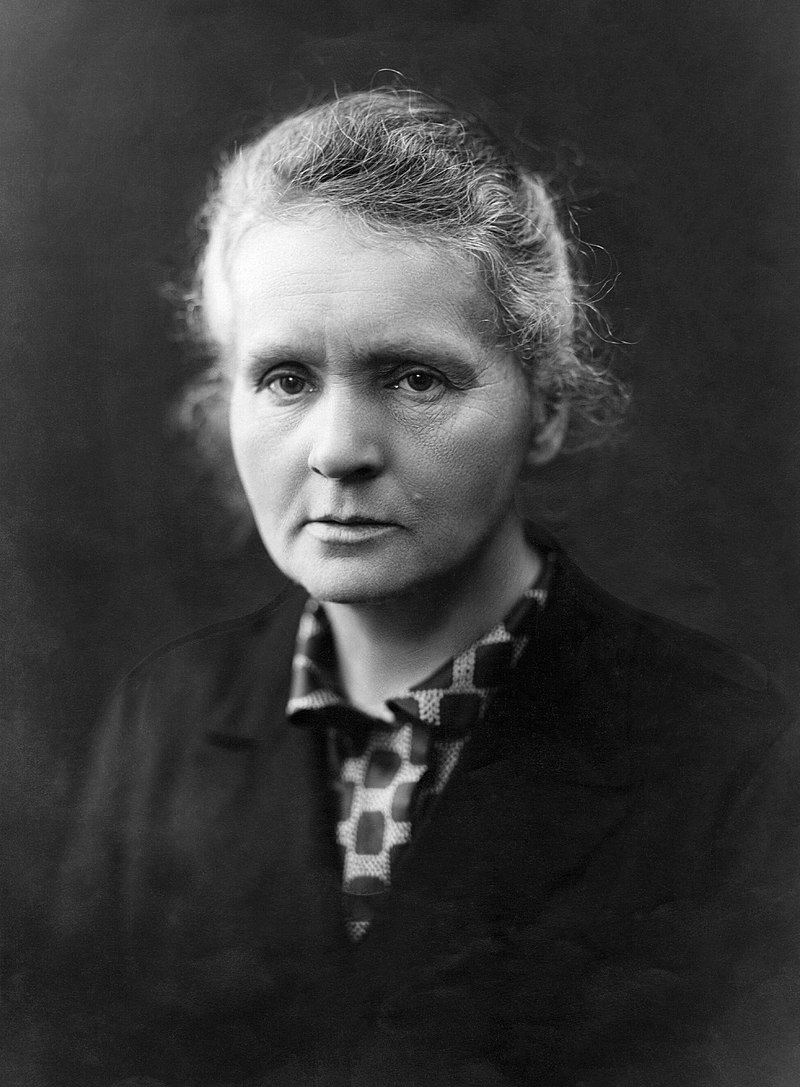
Marie Curie

Marie Curie was a pioneering Polish-French physicist and chemist who conducted groundbreaking research on radioactivity, becoming the first woman to win a Nobel Prize and the only person to win Nobel Prizes in two different scientific fields: Physics and Chemistry. Her work opened new avenues in science and medicine, and she remains an iconic figure in the fight for women's representation in STEM.
Born on Nov 07, 1867 (158 years old)
Global Media Ratings
Countries Mentioned
| Country | Mentions | Sentiment | Dominance | + Persistence | x Population | = Reach | x GDP (millions) | = Power |
|---|---|---|---|---|---|---|---|---|
| Serbia | 1 | 7.00 | 0.20% | +0% | 8,737,371 | 17,132 | $55,000 | 108$ |
| Totals | 1 | 8,737,371 | 17,132 | $55,000 | 108$ |
Interactive World Map
Each country's color is based on "Mentions" from the table above.
Recent Mentions
 Serbia:
The twenty euro banknote features the physicist Marie Curie.
7
Serbia:
The twenty euro banknote features the physicist Marie Curie.
7
 Brazil:
Marie Curie is represented on the €20 note as a scientist.
9
Brazil:
Marie Curie is represented on the €20 note as a scientist.
9
 United Kingdom:
Curie, who discovered radium and polonium with her husband, Pierre, spanned Warsaw and Paris.
9
United Kingdom:
Curie, who discovered radium and polonium with her husband, Pierre, spanned Warsaw and Paris.
9
 Andorra:
Marie Curie is mentioned as one of the cultural figures proposed for the new banknotes.
8
Andorra:
Marie Curie is mentioned as one of the cultural figures proposed for the new banknotes.
8
 Montenegro:
Marie Curie is proposed for the new twenty euro banknote, celebrated for her achievements in science.
9
Montenegro:
Marie Curie is proposed for the new twenty euro banknote, celebrated for her achievements in science.
9
 Kenya:
Marie Curie won two Nobel Prizes, one in chemistry and the other in physics.
9
Kenya:
Marie Curie won two Nobel Prizes, one in chemistry and the other in physics.
9
 Germany:
Marie Curie is included as a notable figure in the cultural theme for the new Euro banknotes.
8
Germany:
Marie Curie is included as a notable figure in the cultural theme for the new Euro banknotes.
8
Andorra:
Marie Curie is featured in the finalist proposals for the redesign of euro banknotes.
9
 Japan:
Curie is included among the final candidates for the Euro banknotes.
9
Japan:
Curie is included among the final candidates for the Euro banknotes.
9
 Panama:
Marie Curie is also proposed for the new euro banknotes.
8
Panama:
Marie Curie is also proposed for the new euro banknotes.
8