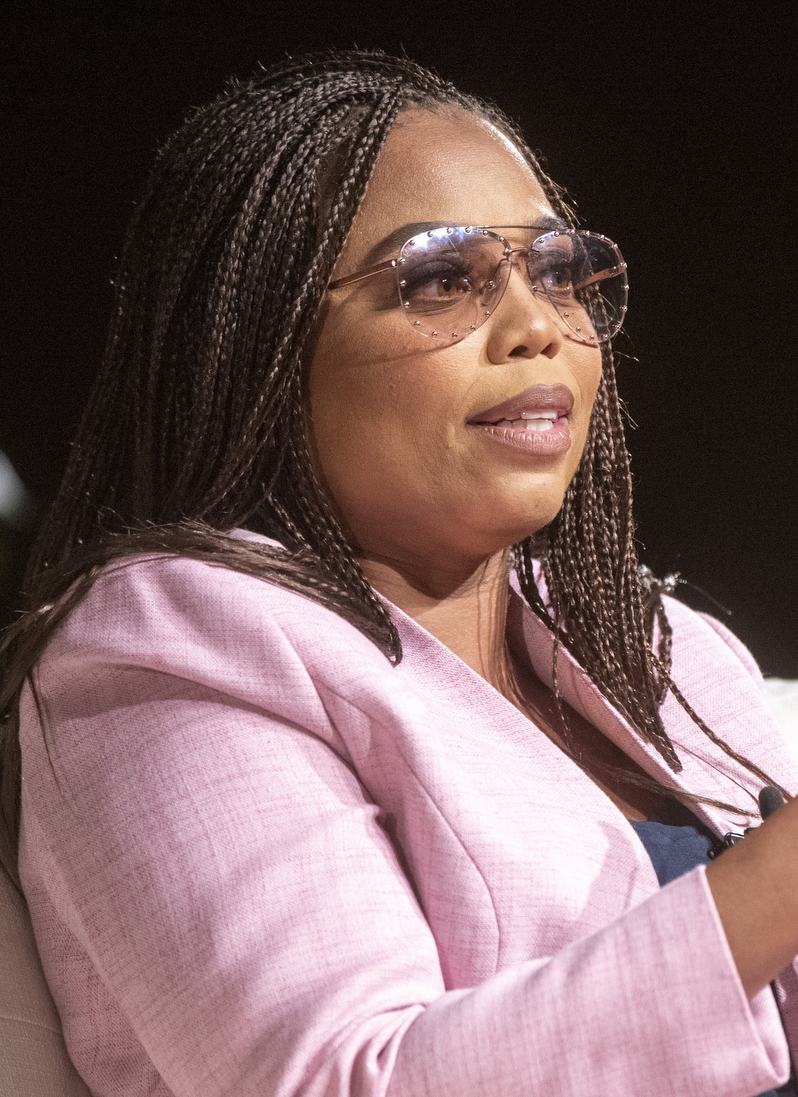
Jemele Hill

Jemele Hill is a renowned journalist and commentator known for her work in sports journalism and her candid views on race and politics. She has garnered significant attention for her outspoken criticism of social injustices and has been a vocal advocate for change. Hill's career includes stints at ESPN and The Atlantic, and she is recognized for her contributions to discussions on race, culture, and politics in America.
Born on Dec 21, 1975 (50 years old)
Global Media Ratings
Countries Mentioned
| Country | Mentions | Sentiment | Dominance | + Persistence | x Population | = Reach | x GDP (millions) | = Power |
|---|---|---|---|---|---|---|---|---|
| United States | 1 | 3.00 | 0.13% | +0% | 331,002,651 | 423,819 | $21,000,000 | 26,889$ |
| Totals | 1 | 331,002,651 | 423,819 | $21,000,000 | 26,889$ |
Interactive World Map
Each country's color is based on "Mentions" from the table above.
Recent Mentions
 United States:
Jemele Hill is a former ESPN personality known for her politically divisive commentary.
3
United States:
Jemele Hill is a former ESPN personality known for her politically divisive commentary.
3
United States:
Jemele Hill posted about the racial dynamics surrounding the fouls committed by Carrington and Cunningham.
5
United States:
Jemele Hill's response to the Sophie Cunningham controversy says more about today's sports media than it does about the Indiana Fever guard.
5
United States:
Jemele Hill is mentioned as part of the larger problem in sportswriting and media.
5
United States:
Jemele Hill doesn't understand why Sophie Cunningham has a shoe deal.
5
United States:
Jemele Hill stated that race and Caitlin Clark's sexuality played a role in her popularity.
5
United States:
Jemele Hill is mentioned as a media figure who seems to pretend to be racist.
2
United States:
Jemele Hill has made comments suggesting discomfort with White star players in basketball.
5
United States:
Jemele Hill argued that Clark's appeal was inseparable from her being a straight White woman in a league made up primarily of Black and lesbian players.
4
United States:
Jemele Hill went further, accusing those who believed officials should have called a foul of 'implying that [Clark] should receive special treatment because she’s straight and white.'
4