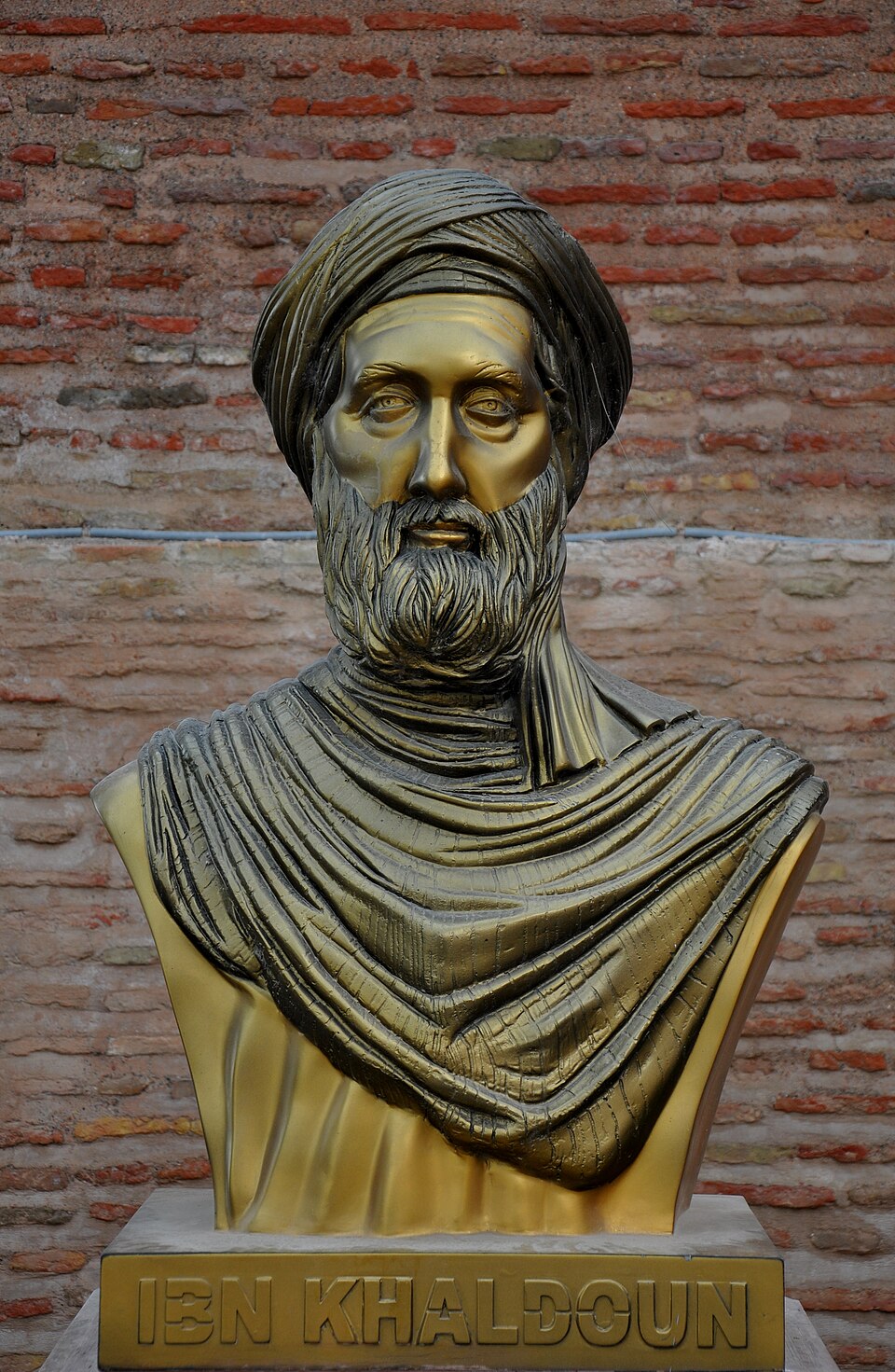
Ibn Khaldun

Ibn Khaldun was a 14th-century Arab historian, philosopher, and social scientist, widely regarded as one of the founding figures of sociology and historiography. His most notable work, the 'Muqaddimah,' presents a comprehensive analysis of the rise and fall of civilizations, emphasizing the importance of social cohesion, economic factors, and the role of culture in shaping societies. His insights into the dynamics of power, economics, and culture remain relevant today, influencing contemporary thought on social and historical processes.
Born on Aug 27, 1332 (694 years old)
Global Media Ratings
Countries Mentioned
| Country | Mentions | Sentiment | Dominance | + Persistence | x Population | = Reach | x GDP (millions) | = Power |
|---|---|---|---|---|---|---|---|---|
| United Arab Emirates | 1 | 9.00 | 0.19% | +0% | 9,890,400 | 19,093 | $430,000 | 830$ |
| Totals | 1 | 9,890,400 | 19,093 | $430,000 | 830$ |
Interactive World Map
Each country's color is based on "Mentions" from the table above.
Recent Mentions
 United Arab Emirates:
Ibn Khaldun was chosen as a pivotal figure for the 2023 edition of the Abu Dhabi International Book Fair.
9
United Arab Emirates:
Ibn Khaldun was chosen as a pivotal figure for the 2023 edition of the Abu Dhabi International Book Fair.
9
 Kenya:
Ibn Khaldun, the philosopher engineer of the 14th century, as a macro historian mapped out the lifecycles of civilisations.
9
Kenya:
Ibn Khaldun, the philosopher engineer of the 14th century, as a macro historian mapped out the lifecycles of civilisations.
9
 Switzerland:
Ibn Khaldun is one of the most significant Arab historians of the 14th century who made controversial statements about black people.
4
Switzerland:
Ibn Khaldun is one of the most significant Arab historians of the 14th century who made controversial statements about black people.
4
Switzerland:
Ibn Khaldun was one of the most significant North African historians of the 14th century.
7
 Bangladesh:
Ibn Khaldun's analysis remains highly relevant in the modern world regarding music and entertainment.
9
Bangladesh:
Ibn Khaldun's analysis remains highly relevant in the modern world regarding music and entertainment.
9