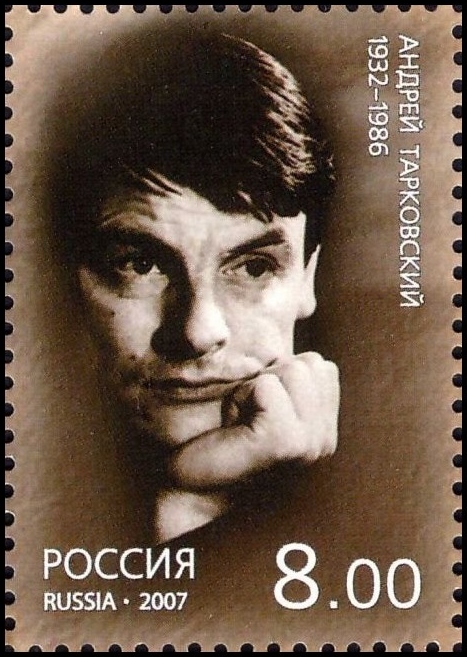
Andreï Tarkovski

Andreï Tarkovski (1932-1986) was a renowned Soviet filmmaker and one of the most influential directors in the history of cinema. Known for his deeply philosophical and visually poetic style, Tarkovski's works often explore themes of spirituality, memory, and the human condition. His notable films, such as 'Andrei Rublev' (1966), 'Solaris' (1972), and 'The Mirror' (1975), are celebrated for their long takes and meticulous composition, inviting viewers to reflect on the nature of time and existence. Tarkovski's impact on the art of filmmaking continues to resonate, inspiring countless filmmakers and cinephiles around the world.
Born on Apr 04, 1932 (94 years old)
Global Media Ratings
Countries Mentioned
No country-level mention data available.
Interactive World Map
Each country's color is based on "Mentions" from the table above.
Recent Mentions
 Brazil:
Andrei Tarkóvski is referred to by José Tolentino Mendonça as a 'master unexpected of spiritual life'.
8
Brazil:
Andrei Tarkóvski is referred to by José Tolentino Mendonça as a 'master unexpected of spiritual life'.
8
 Costa Rica:
Béla Tarr was nicknamed 'the Hungarian Tarkovsky' in reference to the Russian filmmaker Andréi Tarkovski.
8
Costa Rica:
Béla Tarr was nicknamed 'the Hungarian Tarkovsky' in reference to the Russian filmmaker Andréi Tarkovski.
8
 Peru:
Omar Lucas draws inspiration from the contemplative style of Andrei Tarkovski.
7
Peru:
Omar Lucas draws inspiration from the contemplative style of Andrei Tarkovski.
7
 France:
Andreï Tarkovski is referenced in relation to the film-like quality of Wauters' writing.
7
France:
Andreï Tarkovski is referenced in relation to the film-like quality of Wauters' writing.
7
France:
The film draws an analogy to Andreï Tarkovski's work, particularly 'The Mirror'.
7